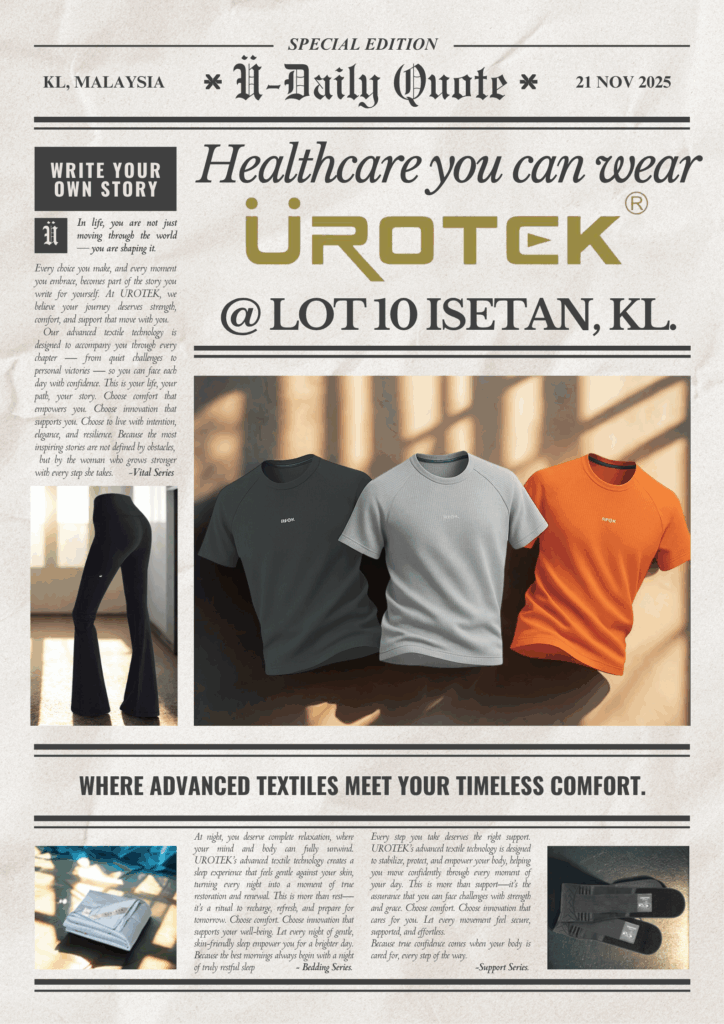
Compression garments have been used in clinical settings for decades to manage oedema and improve venous return. What has changed is the precision with which compression can now be engineered into everyday performance and recovery wear — and how UROTEK applies that precision to knee supports, arm guards, and full-leg sleeves for people who are on their feet all day.
A uniform compression garment applies the same pressure across its entire surface. A graduated compression garment applies more pressure at the furthest point from the heart — the ankle, the wrist, the knee — and gradually less as it moves toward the body’s core. This pressure gradient assists the venous pump, encouraging blood to flow upward rather than pool in the lower limbs. UROTEK knee supports are designed with tighter lateral panels at the joint and progressively lighter compression above and below, so the knee receives support without restricting the quadriceps or calf muscles needed for movement.
Compression is measured in millimetres of mercury (mmHg). Light support garments typically fall in the 8–15 mmHg range — enough to improve comfort during long shifts. Medical-grade garments start at 20–30 mmHg and require a clinical assessment. Most UROTEK supports sit in the 15–20 mmHg zone: firm enough to reduce swelling and joint instability during activity, while remaining comfortable enough to wear for a full work shift without restricting blood flow.
Compression also accelerates the removal of lactate and metabolic waste from muscle tissue after exercise. Post-workout inflammation decreases faster when tissues are under gentle external pressure, which is why compression recovery sleeves have become standard equipment for endurance athletes. The same principle applies to someone who has been standing on a factory floor for eight hours.
See the full compression support range at our shop, or contact us on WhatsApp at +60 19-660 0359 to discuss the right compression level for your situation.